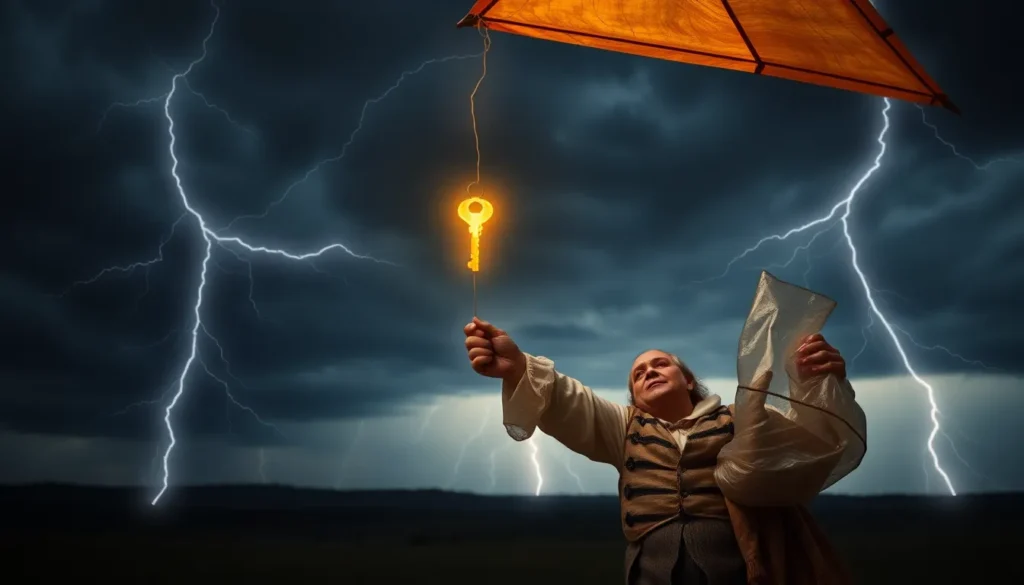
Imagine a world without electricity—no late-night Netflix binges, no phone chargers, and definitely no coffee makers to kickstart the day. It’s hard to believe that this essential force of nature wasn’t always around. But when did humanity finally harness the power of electricity? Spoiler alert: it wasn’t during a lightning storm when someone decided to fly a kite.
The journey to electricity’s invention is a wild ride filled with brilliant minds, shocking discoveries, and a few zaps along the way. From ancient experiments with static electricity to groundbreaking inventions in the 18th and 19th centuries, the timeline is electrifying. Buckle up as we explore the pivotal moments that lit up our world and the year that changed everything forever.
Understanding Electricity
Electricity refers to the presence and flow of electric charge. Its discovery traces back to ancient civilizations that experienced static electricity from natural phenomena, such as lightning. Notably, Thales of Miletus documented static electricity in 600 BC by rubbing amber, revealing early observations of electric properties.
Throughout history, key experiments significantly expanded understanding. In 1600, William Gilbert introduced the term “electricus” while studying magnetism and electricity. By the 18th century, Benjamin Franklin’s famous kite experiment indicated the electrical nature of lightning, leading to his invention of the lightning rod.
The 19th century marked another leap. Michael Faraday’s work on electromagnetic induction in 1831 demonstrated how electricity could be generated. Following this, Thomas Edison’s invention of the practical light bulb in 1879 revolutionized everyday life, making electricity accessible.
Industry advances further entrenched electricity’s role. Nikola Tesla’s development of alternating current (AC) systems in the late 1800s enabled long-distance power transmission, transforming how electricity powered homes and cities. As these discoveries mounted, the landscape of modern society evolved dramatically.
The timeline of electricity reveals a rich tapestry of innovation, experimentation, and collaboration. Its gradual understanding led to foundational principles in physics and engineering, shaping the technology used today. By the late 19th century, electricity emerged as a cornerstone of contemporary life, influencing communication, transportation, and daily activities.
The Discovery of Electricity
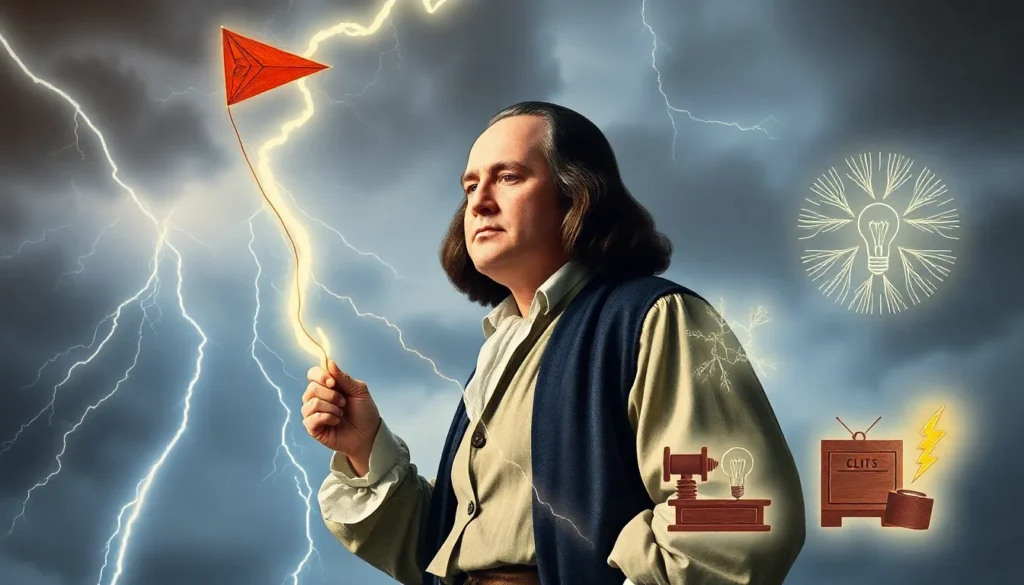
Electricity’s discovery was a gradual process, marked by curious minds and groundbreaking experiments. This journey began long before modern electricity took shape, as early thinkers laid the groundwork for future advances.
Early Experiments
Ancient civilizations made significant strides in understanding electricity. Thales of Miletus documented static electricity around 600 BC, noting its effects when amber was rubbed. The Greeks explored matter’s properties and observed sparks generated from natural minerals. In the 17th century, Otto von Guericke invented a friction machine, producing static electricity, which sparked further interest in the phenomenon. By the 18th century, scientists began conducting systematic experiments, laying the foundation for more profound discoveries.
Key Figures in Electricity’s Discovery
Several prominent figures played pivotal roles in unraveling electricity’s mysteries. William Gilbert, in 1600, was the first to use the term “electricus” to describe materials that attracted small objects. Benjamin Franklin’s kite experiment in 1752 linked lightning to electricity, providing insight into atmospheric electrical phenomena. Michael Faraday contributed significantly with electromagnetic induction in the 1830s, creating the basis for electric generators. Nikola Tesla’s innovations in alternating current systems during the late 19th century revolutionized electricity’s distribution, making electricity widely accessible. Each of these visionaries expanded knowledge and shaped the technological landscape of modern society.
Defining the Year of Invention
Determining the exact year of electricity’s invention involves understanding a series of discoveries over time. Various cultures contributed to this evolution of knowledge.
Historical Context
The journey of electricity began with early Greek philosophers like Thales of Miletus, who first documented static electricity around 600 BC. Ancient experiments sparked curiosity about matter’s properties, leading to critical contributions from different eras. During the 17th century, Otto von Guericke made advancements with his friction machine that generated static electricity. His work laid essential groundwork for future developments. Eventually, the 18th century brought forth Benjamin Franklin’s kite experiment, emphasizing the connection between electricity and lightning. Those foundational moments established a path for a gradual understanding of electricity’s principles.
Milestones in Electricity Development
Significant milestones marked the evolution of electricity as a force. In 1600, William Gilbert coined the term “electricus,” paving the way for future terminology and understanding. Michael Faraday’s work in the 19th century introduced electromagnetic induction, demonstrating how electricity could generate mechanical motion. Following this, Thomas Edison developed the practical light bulb, offering households reliable illumination. Nikola Tesla’s introduction of alternating current systems transformed electricity distribution, maximizing efficiency in power transmission. Each milestone contributed to a deeper understanding of electricity’s potential and applications, shaping its vital role in modern society.
Electricity’s journey from ancient curiosity to modern necessity showcases humanity’s relentless pursuit of knowledge. Each breakthrough built upon the last, creating a rich legacy that transformed daily life. The contributions of pioneers like Franklin, Faraday, and Tesla not only enhanced understanding but also paved the way for innovations that continue to shape the world.
As society moves forward, the importance of electricity remains undeniable. Its role in communication, transportation, and technology underscores the profound impact of those early discoveries. Recognizing this history emphasizes the need to appreciate and innovate further in the realm of electricity.